Exercise title: Reclaiming Symbols: From Oppression to Pride
For students aged 15-16
Time required: 50 minutes
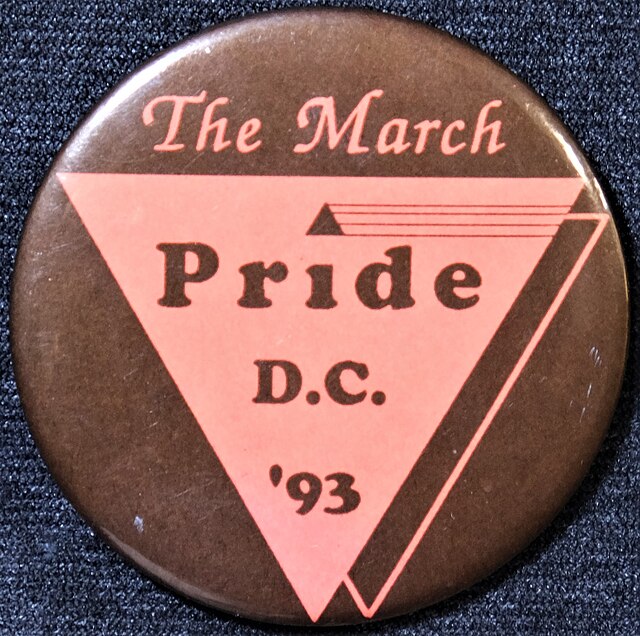
Image Context: This badge was worn at the 1993 March on Washington for Lesbian, Gay, and Bi Equal Rights and Liberation—one of the largest LGBTQ+ rights demonstrations in US history.
Learning Objectives:
- Understand the historical origins of the pink triangle
- Analyze how oppressed communities reclaim symbols of persecution
- Critically examine the power dynamics of symbolic transformation
- Connect historical activism to contemporary movements
Content Warning: This lesson addresses historical persecution, including the Holocaust and homophobia. Create a safe space for discussion and allow students to step out if needed.
Materials Needed:
- The 1993 Pride badge image
- Paper/notebooks
- Optional: access to research materials
- 50 minutes
Part 1: Historical Context – The Pink Triangle’s Origins (10 minutes)
Teacher-led discussion with key information:
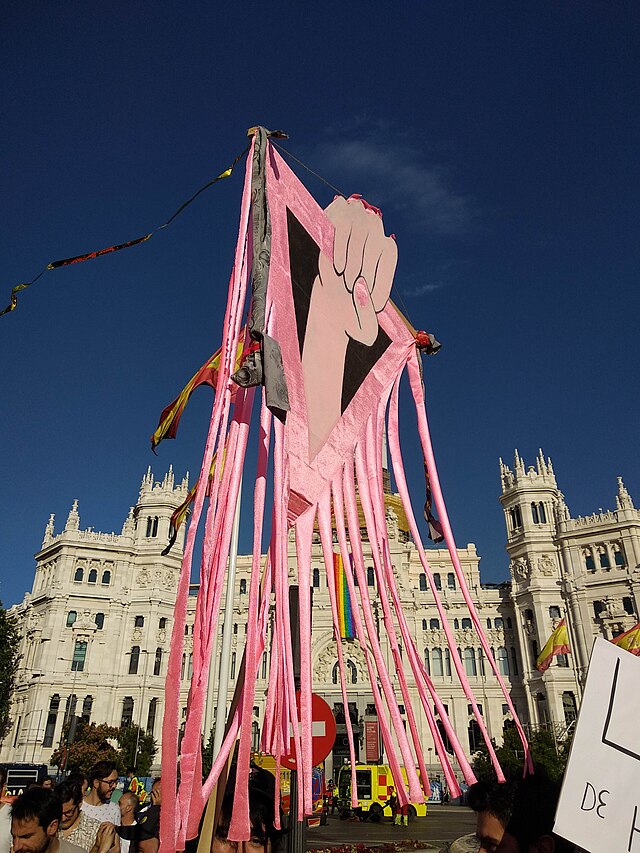
The pink triangle has a dark history that this badge deliberately references:
- In Nazi Germany (1933-1945), the pink triangle was used to identify and persecute gay men in concentration camps
- It was a badge of shame, marking people for imprisonment, forced labor, and death
- After WWII, this persecution was rarely acknowledged—many countries kept anti-gay laws
Class Discussion:
- Why might it be important to remember this history?
- How do you think survivors and their families felt about this symbol?
- What does it mean to take a symbol of oppression and wear it publicly in a gesture of pride?
Part 2: Reappropriation – Taking Back Power (15 minutes)
Small group work (3-4 students per group):
Discuss these questions in your groups:
Understanding Reappropriation:
- By 1993, LGBTQ+ activists were deliberately using the pink triangle as a pride symbol. Why might they do this?
- What changes when a community reclaims a symbol that was used against them?
- The triangle is now inverted (pointing up instead of down) and bright pink instead of dull. What might these changes represent?
- What’s the difference between victims wearing this symbol and oppressors wearing it?
The 1993 March Context:
- This was during the AIDS crisis, when LGBTQ+ people faced widespread discrimination and government neglect
- The slogan “Silence = Death” (also using a pink triangle) was prominent in activism
- How does wearing a Holocaust symbol connect to fighting for rights in the 1990s?
Power and Ownership:
- Can any symbol be reclaimed? What conditions need to exist?
- Does reclaiming a symbol erase its painful history, or preserve it?
Part 3: Comparative Analysis – Other Reclaimed Symbols (10 minutes)
Class brainstorm and discussion:
What other symbols, words, or images have been reclaimed by marginalized communities?
Possible examples to explore:
- “Queer” – once a slur, now reclaimed by LGBTQ+ community
- The word “witch” – reclaimed by feminist movements
- Cultural or religious symbols reclaimed after colonization
For each example, consider:
- What was the symbol’s original oppressive meaning?
- How has it been transformed?
- Does everyone in the community agree with reclaiming it?
- What does the act of reclamation achieve?
Part 4: Contemporary Connections (10 minutes)
Individual reflection – write responses:
Choose one or more prompts:
Personal Connection:
- How do symbols of identity function today? (Think: flags, pronouns, clothing, social media icons)
- Have you seen symbols being reclaimed or repurposed in current movements?
- What makes a symbol powerful enough to reclaim?
Critical Thinking:
- This badge is now a historical artifact. What does that tell us about progress and ongoing struggles?
- Pride events today often use rainbows more than pink triangles. What might explain this shift?
- Is there a danger in symbols of trauma becoming “commercialized” or decorative?
Contemporary Issues:
- LGBTQ+ rights are still contested globally. How does understanding this history inform current activism?
- What symbols are being created (not just reclaimed) by today’s social justice movements?
- If you were designing a badge for a cause you care about today, what would it look like and why?
Closing Discussion (5 minutes)
Whole class reflection:
- What’s one thing that surprised you about this badge’s history?
- Why does understanding symbolic reappropriation matter?
- How can studying objects like this badge help us understand larger historical and political movements?
Extension Activities:
- Research Project: Investigate the 1993 March on Washington. What were the demands? What was achieved? What remains unfinished?
- Creative Response: Design a symbol for a contemporary cause that either reclaims something negative or creates something new. Write a 300-word explanation of your choices.
 Teach Critically
Leave a comment