Exercise Title: Reading Class: The American Dream in Photographs
Target age: Students aged 14-15
Time: 30 minutes
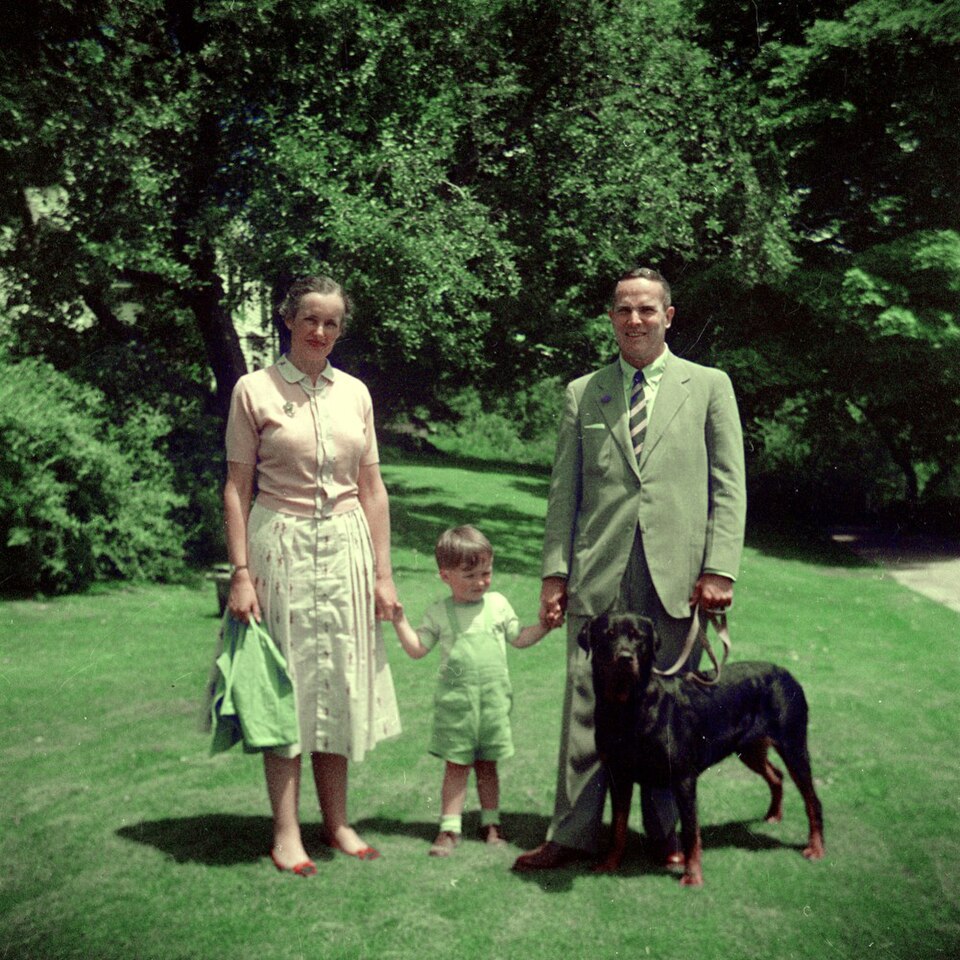
Image Context: This photograph shows the Frick-Blanchard family in the 1950s, a wealthy American family posing in their garden.
Learning Objectives:
- Analyze how wealth and social class are visually communicated
- Question whose stories get preserved and displayed
- Understand the gap between idealized representations and lived realities
Materials Needed:
- The Frick-Blanchard family photograph
- Paper/notebooks
- 30 minutes
Part 1: Individual Response (5 minutes)
Look at the photograph silently for one minute. Then write down:
- Three words that describe how this image makes you feel
- What story do you think this photograph is trying to tell?
- Does this family look like families you know? Why or why not?
Part 2: Visual Analysis (10 minutes)
Work with a partner to examine the details. Use these prompts:
Setting & Composition:
- Where was this photo taken? What does the location tell us?
- How are the people arranged?
- What’s included in the frame?
Clothing & Objects:
- Describe what each person is wearing
- What does their clothing tell us about their social class in the 1950s?
Poses & Expressions:
- How are people standing or holding themselves?
- What are their facial expressions?
- Does this look natural or staged? Why might that matter?
Part 3: Context & Critique (10 minutes)
Discuss as a class:
About This Image:
- This is a professional photograph of a wealthy family. Why might they have had this photo taken?
- Who had access to color photography in the 1950s? What does that tell us?
- This photo has been preserved and is now labelled in an archive. Whose family photos get saved in this way?
The Bigger Picture:
- The 1950s are often called America’s “golden age.” For whom was it golden?
- What kinds of families were left out of this idealized image of American life in the 1950s? Consider: race, class, single parents, working mothers, immigrant families, LGBTQ+ families
- How do images like this shape our understanding of history?
Part 4: Making Connections (5 minutes)
Individual reflection – write responses to one or more:
- What images of “the perfect family” do we see today? (social media, advertising, TV)
- Who benefits when only certain types of families are shown as “ideal”?
- Why does it matter whose stories get photographed, preserved, and displayed?
Extension Questions for Further Discussion:
- How did the economic reality of 1950s America differ from images like this? (Research: housing discrimination, wage gaps, women’s limited career options)
- What labor might have been required to maintain this lifestyle? Who did that labor? Why aren’t they in the picture?
- How do archives and museums choose what to preserve? Whose perspectives shape those choices?
 Teach Critically
Leave a comment